
Introduction: When Your Dog’s Diet Starts Causing Problems
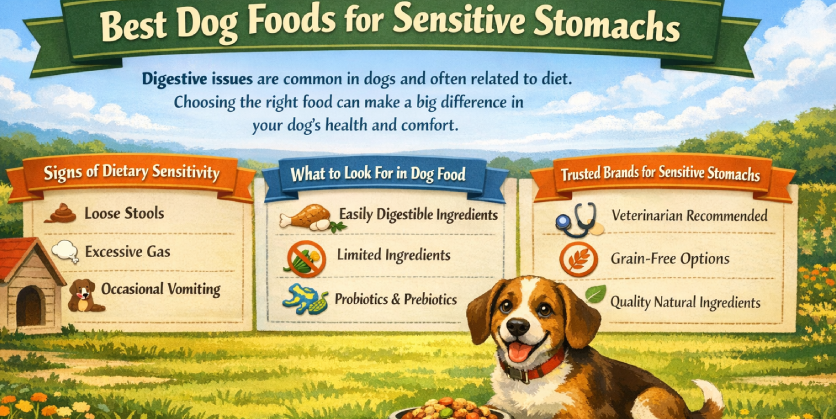
Loose stools, excessive gas, and occasional vomiting are common digestive complaints in dogs. In many cases, these symptoms are not caused by illness but by diet. Certain ingredients can irritate a dog’s digestive system and make it difficult for their body to process food properly.
Finding the best dog foods for sensitive stomach issues can significantly improve your dog’s health and comfort. The right diet supports healthy digestion, reduces stomach irritation, and improves stool quality.
Many pet owners struggle to identify the best sensitive stomach dog food to feed because there are countless options available. Understanding the ingredients that support digestion and knowing which foods veterinarians trust can help you make the right decision.
This guide explains the signs of dietary sensitivity, what to look for in high-quality food, and which trusted brands can support dogs with delicate digestive systems.
Signs Your Dog Needs a Diet Change
Dogs with digestive sensitivities often show consistent symptoms after eating. While occasional stomach upset can happen, recurring issues may indicate that their current food is not suitable.
Common signs include:
- Chronic flatulence or strong-smelling gas
- Intermittent vomiting after meals
- Loose stools or poor stool consistency
- Stomach rumbling or discomfort after eating
- Reduced appetite or picky eating habits
- Lethargy linked to digestive discomfort
When these symptoms appear regularly, switching to one of the best dog foods for sensitive stomach conditions may help resolve the issue. A diet designed for digestion typically contains fewer irritants and more easily absorbed nutrients.
Many dogs experience significant improvement when they are switched to the best sensitive stomach dog food to feed, especially if their previous diet contained fillers or difficult-to-digest ingredients.
However, digestive symptoms should always be monitored closely. Persistent vomiting or diarrhea may indicate infections, parasites, or underlying gastrointestinal disease. Veterinary evaluation ensures the problem is not medical before focusing solely on diet.
What Makes the Best Sensitive Stomach Dog Food to Feed?
Not all dog food is created equal. The best sensitive stomach dog food to feed contains ingredients specifically designed to support digestion while avoiding common irritants.
Several key nutritional factors make a difference.
-
Highly Digestible Protein Sources
Protein quality is one of the most important factors in digestive health. Easily digestible proteins such as lamb, turkey, salmon, or white fish reduce stress on the stomach and intestines. These proteins are absorbed efficiently and help maintain muscle health without causing digestive irritation.
-
Limited Ingredient Formulas
Dogs with sensitive stomachs often react to complex ingredient lists. Foods that contain fewer ingredients reduce the chance of allergic reactions or digestive upset. Many veterinary diets remove common irritants such as wheat, soy, dairy, and artificial additives. Limited ingredient formulas are commonly found among the best dog foods for sensitive stomach problems because they simplify digestion and allow pet owners to identify triggers more easily.
-
Prebiotics and Probiotics
A healthy gut microbiome is essential for proper digestion. Prebiotics feed beneficial gut bacteria, while probiotics introduce helpful microorganisms that support digestive balance. Foods that include these ingredients improve stool consistency and help maintain healthy digestion in dogs with sensitive stomachs.
-
Easily Digestible Carbohydrates
Some carbohydrates are easier for dogs to process than others. Ingredients such as sweet potatoes, brown rice, or oats provide energy while remaining gentle on the digestive system. When these elements are combined in balanced proportions, they create the best sensitive stomach dog food to feed for dogs with recurring digestive discomfort.
Spotlight on British Quality: Vet-Approved Brands
Many premium dog food brands focus specifically on digestive health. British-made formulations are known for strict quality standards and carefully selected ingredients.
Two brands consistently recommended for sensitive digestion include Vitalin and Burgess.
-
Vitalin Sensitive Dog Food
Vitalin sensitive dog food is widely recognized for its carefully balanced ingredients designed to support dogs with delicate digestive systems. The formulation focuses on high-quality proteins and limited ingredients that reduce irritation. One reason vitalin sensitive dog food stands out is its hypoallergenic design. Many recipes avoid common allergens and include grain-free options for dogs that struggle with traditional grain-based diets.
The food also contains easily digestible root vegetables and botanicals. Ingredients such as sweet potato, chicory root, and natural herbs help support digestion while providing essential nutrients.
Another advantage of vitalin sensitive dog food is its focus on natural nutrition without unnecessary fillers. The balanced formula supports gut health, improves stool quality, and provides consistent energy for active dogs.
Because of its carefully selected ingredients and digestibility, it is often considered one of the best dog foods for sensitive stomach problems by veterinarians and pet nutrition experts.
-
Burgess Sensitive Dog Food
Burgess sensitive dog food is another well-respected option for dogs with digestive sensitivities. The brand focuses on simple, high-quality ingredients that support gentle digestion. The formula includes easily digestible proteins that help reduce stomach irritation. These proteins are paired with balanced carbohydrates that provide energy without overwhelming the digestive system.
A key advantage of burgess sensitive dog food is the addition of important minerals such as calcium and other nutrients that support overall health. These minerals help maintain bone strength while also supporting normal digestive function. Many veterinarians recommend burgess sensitive dog food as a reliable sensitive dog food option for dogs prone to gas, loose stools, or mild food intolerances.
For dogs that require consistent digestive support, this type of sensitive dog food can help soothe irritated digestive tracts while maintaining complete nutritional balance.
How to Safely Transition to a Sensitive Dog Food
Switching foods too quickly can worsen digestive problems rather than solve them. Even when transitioning to the best dog foods for sensitive stomach conditions, the digestive system needs time to adapt.
Veterinarians recommend the 7-Day Transition Rule.
The 7-Day Transition Guide
Day 1–2:
75% current food + 25% new food
Day 3–4:
50% current food + 50% new food
Day 5–6:
25% current food + 75% new food
Day 7:
100% new food
This gradual transition allows the digestive system to adjust to the new ingredients and reduces the risk of vomiting or diarrhea.
During this process, monitor your dog’s stool quality, appetite, and energy levels. If symptoms worsen, consult a veterinarian to determine whether the new food is appropriate.
Conclusion: Rule Out Medical Issues First
Diet plays a major role in digestive health, but not all stomach problems are caused by food. Parasites, bacterial infections, and gastrointestinal conditions can produce symptoms that look like dietary sensitivity. Before making major dietary changes, it is important to consult a veterinarian. A proper examination helps rule out underlying medical problems and ensures that switching to the best dog foods for sensitive stomach conditions will truly address the issue.
At the British Veterinary Clinic, veterinary professionals assess digestive symptoms carefully before recommending the best sensitive stomach dog food to feed for your dog’s specific needs. With expert guidance, pet owners can choose safe, balanced nutrition that supports long-term gut health.
Frequently Asked Questions
How do I know if my dog needs sensitive dog food?
Dogs that frequently experience digestive symptoms may benefit from a specialized diet. Signs include chronic gas, recurring loose stools, vomiting after meals, stomach rumbling, and decreased appetite. If these symptoms appear regularly, your dog may struggle to digest their current food properly. Switching to a high-quality sensitive dog food with easily digestible proteins and fewer irritants may improve digestion. However, it is important to consult a veterinarian before making dietary changes to ensure that parasites, infections, or other medical conditions are not causing the symptoms.
Can I feed my dog chicken and rice every day for a sensitive stomach?
Chicken and rice are commonly used as a short-term bland diet when dogs experience stomach upset. The combination is gentle on the digestive system and can help stabilize digestion for a few days. However, feeding chicken and rice long-term is not recommended because the mixture lacks essential nutrients required for balanced canine health. Dogs need vitamins, minerals, healthy fats, and other nutrients that a simple homemade diet cannot provide. For long-term digestive support, veterinarians recommend choosing the best sensitive stomach dog food to feed instead of relying on temporary bland meals.
Is grain-free always the best sensitive stomach dog food to feed?
Grain-free diets are helpful for some dogs, but they are not automatically the best solution for every pet with digestive issues. Some dogs have sensitivities to specific grains such as wheat, while others digest grains like brown rice or oats without any problem. In many cases, the protein source or artificial additives are the true cause of stomach irritation. The best sensitive stomach dog food to feed depends on your dog’s individual dietary needs and possible allergies. Veterinary guidance helps identify the most appropriate diet for your dog’s digestive health.