
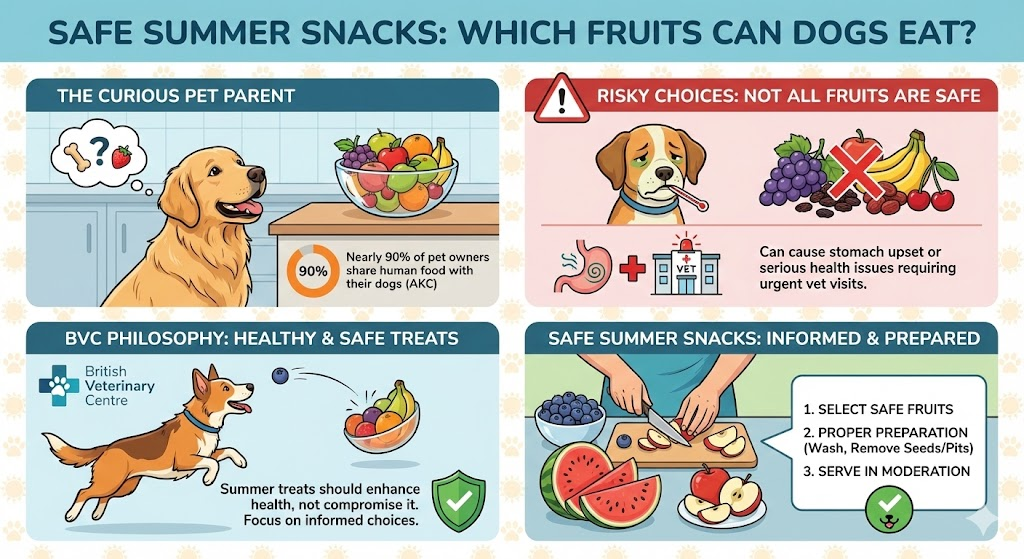
Have you ever caught your dog eyeing your fruit bowl with clear curiosity, wondering whether it was safe to share? You are not alone. As temperatures rise, many pet parents look for light, refreshing treats to help their dogs stay cool. But while fruit can be healthy, not every variety is safe for dogs.
Some fruits can cause stomach upset, while others may lead to serious health issues that require an urgent vet visit. Despite this, the American Kennel Club reports that nearly 90 percent of pet owners share human food with their dogs, often without knowing which options are truly dog-friendly.
At British Veterinary Centre, we believe summer treats should enhance your dog’s health, not compromise it. With informed choices and proper preparation, select fruits can be a safe, refreshing, and nutritious addition to your dog’s diet. Let’s explore which fruits dogs can enjoy and how to serve them safely.
Tropical Treats: Mangoes and Pineapples
Can Dogs Eat Mango?
Yes! Mangoes are a tropical favorite and are packed with vitamins A, B6, C, and E, making them a healthy summer treat. But here’s the catch: always remove the pit. Mango pits pose a choking hazard and contain a small quantity of cyanide, which can be toxic. Also, peel the tough skin and cut the fruit into small, bite-sized pieces suitable for your dog’s size.
Tips for serving mango safely:
- Remove the pit and peel
- Cut into small cubes
- Serve as an occasional treat, not daily
So, can dogs eat mango? The answer is yes, but moderation is key. At British Veterinary Centre, we often remind pet owners that even safe fruits can upset a dog’s stomach if overfed.
Is Pineapple Safe?
Pineapple is also safe in moderation. Its enzymes, such as bromelain, can aid digestion and reduce inflammation. However, pineapple is high in natural sugars and acidity, so it should remain an occasional treat. Always remove the spiky skin and tough core before serving, and stick to small portions, especially for smaller breeds.
Hydrating Heroes: Watermelon
Can Dogs Eat Watermelon?
Watermelon is a summer superstar for dogs. Composed of over 90% water, it’s hydrating, low in calories, and full of vitamins A, B6, and C, plus potassium. Perfect for hot Abu Dhabi days, watermelon can be a fun, refreshing snack for your pup.
Serving tips:
- Always remove seeds and rind
- Cut into small, manageable cubes
- Freeze chunks for a cool training treat
Remember, seeds can cause intestinal blockages, and the rind is difficult to digest. When pet owners ask, Can dogs eat watermelon?, the answer is yes, just serve it properly. At British Veterinary Centre, we often recommend frozen watermelon cubes for dogs during summer heat.
The Superfood Berry: Blueberries
Can Dogs Eat Blueberries?
Blueberries are tiny nutritional powerhouses that dogs can safely enjoy. Packed with antioxidants, fiber, and vitamins, they support immune health and help fight cellular damage. At roughly 85 calories per cup, they are perfect as low-calorie training treats.
How to serve:
- Offer fresh or frozen
- Start with a few berries and observe tolerance
- Ideal for rewarding good behavior or adding to meals
So, can dogs eat blueberries? Absolutely. These berries are safe, healthy, and often a favorite among canine companions. Including them regularly in moderation adds variety and nutrition to your dog’s diet.
Strawberries and Oranges
Can Dogs Eat Strawberries?
Are you thinking, “Can dogs eat strawberries?” Yes, strawberries are another safe and tasty fruit for dogs. Rich in vitamin C, fiber, and antioxidants, they may even help whiten your dog’s teeth naturally. Remember to remove green tops, slice larger berries, and serve in moderation, too much sugar can upset the stomach.
Can Dogs Eat Oranges?
Oranges are safe for dogs if peeled completely and seeds removed. High in vitamin C, they provide a healthy boost, but their acidity may upset some dogs. Start with a small segment and monitor your pet’s reaction.
When pet owners ask, ” Can dogs eat oranges? the answer is yes, but some dogs prefer less acidic fruits. Veterinarians recommend introducing citrus fruits gradually while watching your dog carefully for any digestive upset or unusual responses.
Moderation is Key
Fruits can make summer fun, hydrating, and nutritious, but they should never replace a balanced dog diet. Treats, including fruit, should not comprise more than 10% of your dog’s daily intake. Introduce new fruits gradually and watch for signs of digestive upset or allergies.
At British Veterinary Centre, we guide pet owners on safe, healthy snacking and overall canine nutrition. Proper portioning, preparation, and moderation are key to keeping your furry friend happy and healthy all year long.
Ready to learn more about safe treats for your dog? Visit British Veterinary Centre to schedule a consultation with our veterinarians and get personalized advice on nutrition, summer safety, and more.
FAQs
Can dogs eat the skin of a mango?
No. Mango skin should always be removed before feeding. It’s tough to digest and can lead to stomach upset. Always serve only the peeled, pit-free flesh to keep your dog safe and happy.
Are dried fruits like dates safe for dogs?
Thinking Can dogs eat dates? Yes, fresh dates are technically safe in tiny amounts, but they are very high in sugar and contain pits, which are choking hazards. Dried dates concentrate the sugar even more, making them an unsuitable treat. If you do offer a date, remove the pit completely and limit it to a rare, tiny piece. The sugar content outweighs the minimal nutritional benefit.
How much watermelon can I give my dog?
For small dogs (under 20 lbs), limit to 1-2 small cubes. Medium dogs (20-50 lbs) can have 3-4 cubes, while large dogs (over 50 lbs) can enjoy 5-6 cubes. Always introduce gradually and adjust based on your dog’s size and tolerance.