
Has your dog been drinking more water lately, sleeping longer, or just not acting like herself? Small changes like these are easy to brush off, but they can be the first warning signs of something serious. Dog kidney disease and tick-borne illnesses often begin quietly, which is why spotting them early can make a real difference.
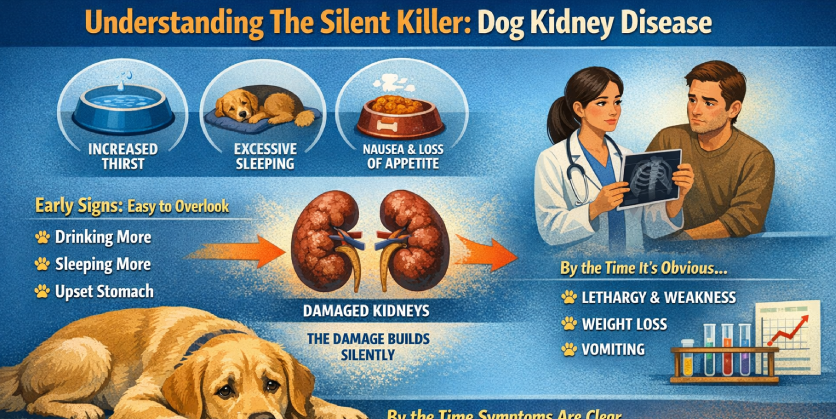
Understanding The Silent Killer: Dog Kidney Disease
Dog kidney disease occurs when the kidneys can no longer filter waste, regulate fluid balance, and support normal body function as they should. It can be chronic, meaning it develops slowly over time, or acute, meaning it occurs suddenly and can become an emergency. What makes kidney disease in dogs especially worrying is how quietly it can develop. By the time bloodwork shows a clear issue, the kidneys may already be under serious strain.
The problem is that dog kidney disease symptoms often look ordinary at first. Your dog may drink a little more, sleep a little longer, or have one or two stomach upsets that seem unrelated. Then the pattern builds. By the time the changes feel obvious at home, the kidneys may already be under real strain
.
The Earliest Dog Kidney Disease Symptoms
The earliest dog kidney disease symptoms are easy to miss because they can look like ageing, heat, or a mild stomach issue. That is why small changes matter.
Watch for these early red flags:
- Drinking more water than usual
- Urinating more often
- Weight loss without a clear reason
- Reduced appetite
- Vomiting or nausea
- Low energy or unusual tiredness
If you notice any of these dog kidney disease symptoms, do not wait for them to get worse. A senior screening visit, blood panel, urinalysis, and blood pressure check can help catch dog kidney disease earlier and give your dog a better chance of long-term support.
The Threat In The Grass: Tick-Borne Illnesses
Kidneys are not the only hidden concern. Tick-borne illness can also begin quietly, especially if no one ever saw the tick.
Common signs your dog has Lyme disease include:
- Shifting leg lameness
- Swollen or painful joints
- Fever
- Tiredness or reluctance to move
- Loss of appetite
- General stiffness
One reason the signs your dog has lyme disease are often missed is timing. Symptoms may not show up until months after the tick bite. That delay makes dog Lyme disease easy to overlook at home.
Lyme Disease Dog Heat Rash: Why This Search Can Mislead Owners
The phrase Lyme disease dog heat rash causes a lot of confusion. In people, Lyme disease is strongly linked with the classic bullseye skin lesion called erythema migrans. In dogs, the common signs listed by veterinary sources include fever, lameness, lethargy, joint swelling, pain, loss of appetite, and swollen lymph nodes, not a reliable bullseye rash. That means a search for Lyme disease dog heat rash can send owners in the wrong direction.
In practice, some owners notice redness on the belly or thin-haired skin and assume it is just heat irritation, grass contact, or mild allergy. That can happen, especially in warm climates. The bigger issue is that the tick itself may never be seen, and the classic human rash is not a dependable clue in dogs. When a dog has a fever, soreness, or unexplained limping, it is safer to consider a cause beyond a simple rash.
Can Dog Ticks Transmit Lyme Disease Here?
The short answer to can dog ticks transmit Lyme disease is yes. Infected ticks can transmit Borrelia burgdorferi, the bacteria that cause Lyme disease. Ticks can also carry other pathogens, which is why veterinarians think about Lyme alongside illnesses such as ehrlichiosis and anaplasmosis.
If you are asking, can dog ticks transmit Lyme disease? The next question should be prevention. CAPC recommends year-round tick control for dogs, not just seasonal treatment, because tick activity can occur year-round and dogs may travel to higher-risk areas. For many patients, that means staying consistent with vet-prescribed preventives rather than waiting until a tick is found. That approach helps lower the risk of dog Lyme disease and other tick-borne infections.
Do Not Wait For Symptoms To Get Louder
Both dog kidney disease and the signs your dog has Lyme disease can start with symptoms that are easy to excuse.
Book a veterinary visit if your dog shows:
- Increased thirst
- More frequent urination
- Vomiting
- Unexplained weight loss
- Fever
- Shifting lameness
- Joint swelling
- Sudden lethargy
Dog kidney disease symptoms are often subtle at first. Tick-borne infections can be just as quiet. Booking a senior blood panel or a tick-borne disease screen at The British Veterinary Centre can help catch the problem before it becomes harder to manage.
FAQs
Is Dog Kidney Disease Curable?
Chronic dog kidney disease is usually managed rather than cured. The aim is to slow progression, control nausea, support hydration, manage phosphorus and blood pressure, and protect quality of life. Acute kidney injury is different. If it is caught very early and the underlying cause is treatable, some dogs can recover much more kidney function than in chronic cases. Recovery depends on early intervention and the extent of kidney injury at the time of diagnosis.
How Long Does It Take For Signs Your Dog Has Lyme Disease To Appear?
The signs your dog has Lyme disease often do not appear immediately after a tick bite. Cornell notes that when dogs do become sick, symptoms commonly show up 2 to 5 months later. That delayed timeline is why Lyme can be missed at home. Owners may not remember a tick exposure from months ago, especially if the bite was small or never seen. If limping, fever, joint swelling, or lethargy appear without a clear reason, tick-borne disease should stay on the list.
What Should Dogs With Kidney Disease Eat?
The best diet for dog kidney disease is usually a veterinary renal diet chosen for the stage of disease and the dog in front of you. These diets are typically formulated with reduced phosphorus, carefully adjusted protein, and support nutrients such as omega-3 fatty acids. They are designed to help slow progression and maintain body condition. The wrong homemade or over-the-counter diet can make things worse, so food changes should be made with your vet after bloodwork and urinalysis confirm the diagnosis.