
My Cat Is Sneezing: Is It Just a Cold or Something More?
When Sneezing Is More Than Just a Ticklish Nose
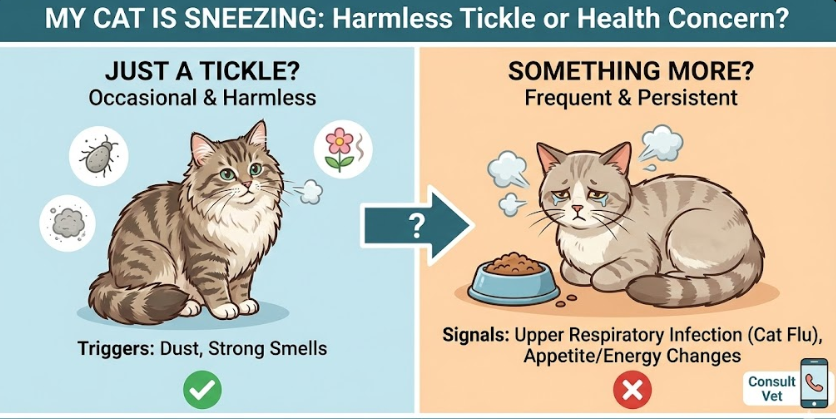
An occasional sneeze in cats is usually harmless. Dust in the air or a strong smell can trigger it, just like in humans. But when your cat starts having frequent sneezing fits, it often signals something more serious. Persistent cat sneezing is one of the earliest signs of upper respiratory infections in cats, commonly known as cat flu.
At British Vet Clinic, we often meet concerned pet owners who notice sneezing along with changes in appetite or energy. Understanding when cat sneezing is normal and when it points to illness helps you act early and protect your cat’s health.
Common Causes of Sneezing in Cats
Sneezing can have simple causes, but it can also point to infection. Knowing the difference is key for every pet owner.
Environmental Irritants That Trigger Cat Sneezing
Everyday household elements can irritate a cat’s sensitive nasal passages. Dust from litter boxes, pollen, smoke, cleaning sprays, or perfumes often cause short term cat sneezing. These sneezes are usually dry and stop once the irritant is removed. If your cat otherwise eats well and behaves normally, the cause is often environmental.
Viral Infections and Cat Flu
If cat sneezing continues for several days, viral infections are a strong possibility. Feline Herpesvirus and Calicivirus are the most common causes of cat flu. These viruses inflame the upper respiratory tract, leading to repeated sneezing, congestion, and nasal discharge. Cat flu spreads easily between cats, especially in multi cat households or boarding facilities.
When Sneezing Becomes Serious
Understanding Dry vs Wet Sneezing
A dry sneeze is sudden, brief, and usually linked to dust or mild irritation. Wet sneezing is more concerning. It comes with nasal discharge, congestion, and repeated sneezing fits. Wet sneezing often indicates infection rather than irritation.
If your cat sneezing is accompanied by thick mucus, frequent nose wiping, or noisy breathing, it is no longer just a cold. At this stage, professional veterinary care is essential to prevent complications.
Recognizing Symptoms of Cat Flu Early
Early detection of cat flu makes treatment more effective and recovery faster.
Congestion and Noisy Breathing
A congested cat often breathes loudly through the nose. You may hear snorting or wheezing sounds, especially when your cat is resting. Congestion causes discomfort and worsens cat sneezing, making it harder for your cat to breathe normally.
Loss of Appetite and Smell
Cats rely heavily on their sense of smell. When congestion sets in, food becomes less appealing. A cat with flu may sniff food and walk away. Loss of appetite is one of the most common reasons pet owners seek help for cat sneezing and cat flu.
Lethargy and Reduced Interaction
Healthy cats are curious and alert. Cat flu often causes fatigue, making your pet sleep more and play less. If cat sneezing is paired with lethargy, it strongly suggests infection rather than irritation.
The Link Between Sneezing and Eye Infections
Watery Eyes and Conjunctivitis in Cats
Respiratory viruses rarely affect only the nose. Many cats with the flu develop watery eyes, redness, or discharge. Conjunctivitis often appears alongside cat sneezing, as the same virus inflames both the eyes and nasal passages.
Eye discharge may start clear but can turn yellow or green if bacteria join the infection. Treating both respiratory and eye symptoms together is crucial for full recovery. This is why a veterinary diagnosis is important instead of home remedies.
Seasonal Triggers That Make Sneezing Worse
Why Sneezing in Winter Is More Common
Many pet owners notice increased cat sneezing in winter. Cooler temperatures, dry air, and constant air conditioning dry out nasal passages. This irritation lowers local immunity and allows viruses to take hold more easily.
Cats kept indoors during winter also have closer contact with each other, increasing the spread of cat flu. Seasonal sneezing should never be ignored if it lasts more than a few days.
How British Vet Clinic Helps Cats With Sneezing and Cat Flu
At the British Vet Clinic, we take cat sneezing seriously because it often signals deeper health issues. Our vets conduct thorough examinations to identify whether sneezing is caused by irritation, viral infection, or secondary bacterial problems.
Treatment may include antiviral support, antibiotics if needed, steam therapy guidance, and eye medications for conjunctivitis. We also guide pet owners on home care that supports faster healing and comfort.
Helping Your Cat Breathe Easier
Sneezing may seem minor, but persistent cat sneezing should never be overlooked. From simple irritants to contagious cat flu, early action protects your cat from pain, appetite loss, and complications.
If your cat stops eating, becomes lethargic, or develops yellow or green discharge from the nose or eyes, visit the British Vet Clinic immediately. Prompt care can make a significant difference in recovery and long term health.
Frequently Asked Questions
Can I give my cat human medicine for a cold
No, human cold medicines are extremely dangerous for cats. Drugs like Tylenol are toxic and can be fatal even in small doses. Cats process medications very differently from humans, and self medicating can cause severe liver damage or death. If your cat sneezing seems severe or persistent, always consult a veterinarian. At British Vet Clinic, we prescribe only cat safe treatments based on weight, symptoms, and overall health, ensuring safe and effective recovery.
Is cat flu contagious to other cats
Yes, cat flu is highly contagious between cats. It spreads through sneezing, nasal discharge, shared bowls, bedding, and even human hands. If one cat in your home shows signs like cat sneezing, watery eyes, or congestion, isolation is important. Kittens, senior cats, and those with weak immunity are at higher risk. Early veterinary care and proper hygiene can significantly reduce transmission and speed up recovery.
How long does a cat cold last
A mild cat cold may improve within seven to ten days with supportive care. However, moderate to severe cat flu can last two to three weeks, especially if complications like eye infections develop. Some cats become carriers and may show symptoms again during stress or seasonal changes. If cat sneezing lasts more than a few days or worsens, a veterinary visit ensures proper treatment and prevents long term respiratory issues.