
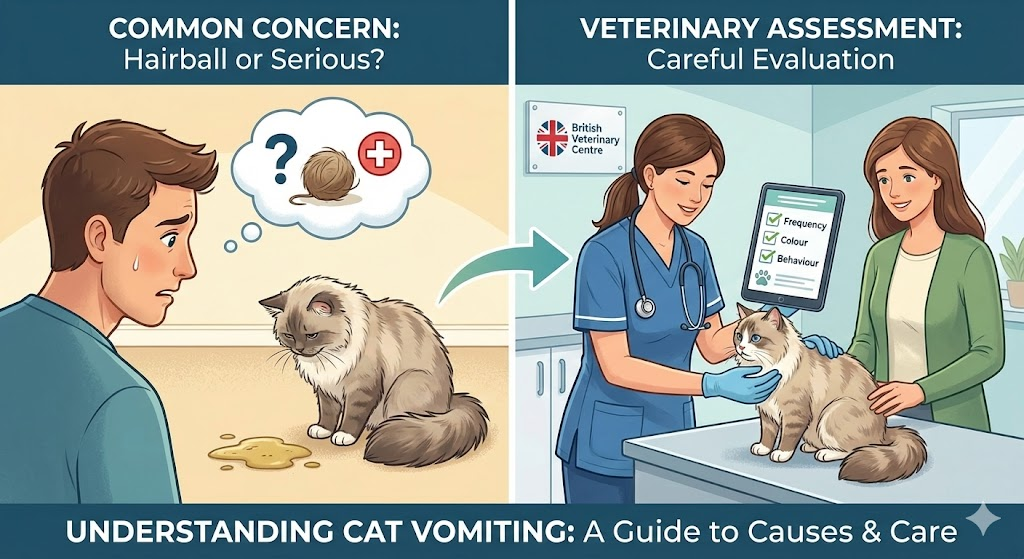
Vomiting is one of the most common reasons cats are brought to the veterinary clinic. For many owners, it is also one of the most stressful. Seeing vomit on the floor raises immediate questions. Is this just a hairball or is something more serious happening?
Understanding why is my cat vomiting starts with recognising that cats vomit for many reasons. Some are mild and temporary. Others signal underlying illness that needs medical attention. The challenge is knowing when to monitor and when to act.
At the British Veterinary Centre, vomiting in cats is assessed carefully. Cats often hide discomfort well, so visible symptoms such as vomiting deserve closer attention. Colour, frequency, behaviour changes, and appetite all provide important clues.
This guide explains what different types of vomit may indicate, when vomiting becomes an emergency, and what steps to take next.
Decoding the Vomit: What the Color Means
The appearance of vomit often gives the first hint about what is happening inside the body. While colour alone does not confirm a diagnosis, it helps guide next steps.
Why Is My Cat Vomiting Yellow Liquid?
Yellow vomit usually contains bile. Bile is a digestive fluid produced by the liver and released into the intestines. When a cat vomits bile, it often means the stomach is empty.
This can happen when a cat goes too long without eating or has mild stomach irritation. However, repeated episodes of yellow vomit may point to liver disease, intestinal inflammation, or problems affecting digestion.
If my cat vomiting yellow liquid becomes a recurring concern, especially alongside lethargy or weight loss, veterinary evaluation is advised.
Why Is My Cat Vomiting White Foam?
White foam is commonly caused by stomach irritation. The foam forms when stomach acid and saliva mix with air.
In some cases, white foam vomiting is linked to gastritis, hair accumulation, or mild indigestion. Upper respiratory infections can also cause excess saliva, which contributes to foamy vomit.
When owners ask why is my cat vomiting white foam, the answer depends on frequency and appetite. An isolated episode may resolve on its own. Ongoing vomiting requires investigation.
When Is It an Emergency?
Vomiting is not always urgent but certain signs mean immediate care is needed. Delaying treatment can allow a manageable condition to worsen.
Vomiting and Not Eating
If a cat is vomiting and refusing food, this combination is concerning. Appetite loss suggests nausea, pain, or obstruction.
Cats that are vomiting and not eating may be dealing with pancreatitis, intestinal blockage, kidney disease, or toxin exposure. In these cases, waiting at home can increase risk.
Frequency Matters
How often vomiting occurs matters just as much as what it looks like. One isolated episode may not be serious. Repeated vomiting is different.
When owners ask why does my cat keep vomiting, the distinction between acute and chronic vomiting is important. Vomiting several times in one day or over multiple days should be assessed by a veterinarian.
Common Causes of Vomiting in Abu Dhabi
Local environment and lifestyle factors influence vomiting patterns seen in cats in Abu Dhabi.
Dietary Indiscretion
Cats may ingest insects, small lizards, or inappropriate food scraps. These can irritate the stomach or cause digestive upset.
Hairballs
Hairballs are common, especially in long-haired breeds. Indoor cats living in air-conditioned environments groom frequently, increasing hair ingestion.
Parasites
Intestinal worms can irritate the digestive tract and lead to vomiting. Parasite prevention plays an important role in reducing this risk.
Kidney Disease
Chronic kidney disease is common in older cats. Vomiting may be one of the first noticeable signs, often accompanied by increased thirst or weight loss.
When asking why my cat is vomiting, age and medical history matter greatly.
What Should I Do? Immediate Steps
When vomiting occurs, calm observation helps guide safe decisions.
- Food can be withheld for up to twelve hours to allow the stomach to settle. Water should remain available unless advised otherwise by a veterinarian. Cats with diabetes should not be fasted without veterinary guidance.
- Monitor closely for other symptoms such as diarrhoea, lethargy, hiding behaviour, or changes in breathing.
- Contact the British Veterinary Centre if vomiting occurs more than twice within twenty four hours or if other symptoms appear.
If owners are unsure my cat is vomiting what should I do, a phone consultation can help determine urgency.
Diagnosis and Treatment at British Veterinary Centre
Vomiting is a symptom, not a diagnosis. Identifying the cause allows appropriate treatment and reduces recurrence.
At the British Veterinary Centre, assessment may include a physical examination, abdominal palpation, and temperature checks. Diagnostic testing may involve blood work to evaluate organ function and infection markers.
Imaging such as X-rays or ultrasound helps identify foreign objects, obstruction, or organ changes. Treatment varies based on findings and may include medication, dietary changes, fluid therapy, or further investigation.
Conclusion: Do Not Wait and See
Cats often hide pain and illness until symptoms become more obvious. Vomiting is one of the few visible signs owners may notice early.
Waiting too long can allow a manageable condition to progress into a more serious one. Early assessment is usually simpler, safer, and more cost-effective.
If vomiting persists or feels unusual, trust that instinct and seek veterinary advice.
FAQs
Why Is My Cat Vomiting White Foam and Not Eating?
Vomiting white foam combined with appetite loss suggests stomach irritation or nausea. It may be caused by gastritis, hair buildup, infection, or systemic illness. Appetite loss in cats should not be ignored because cats are prone to rapid metabolic changes when they stop eating. Veterinary evaluation helps identify the underlying cause and determine whether medication or further diagnostics are needed.
Is It Normal for Cats to Vomit Hairballs?
Occasional hairball vomiting can be normal, especially in long haired cats. However, frequent hairball vomiting may indicate excessive grooming, dietary imbalance, or reduced gut motility. If hairballs occur often or are accompanied by weight loss or appetite changes, veterinary assessment is recommended to rule out underlying issues.
What Home Remedy Can I Give My Cat for Vomiting?
Home remedies are not recommended without veterinary guidance. Some substances that appear harmless can be toxic to cats or worsen symptoms. Vomiting should be treated based on the cause, not suppressed at home. Consulting a veterinarian ensures safe and appropriate care.